Steel installation is a critical phase in modern construction, translating structural design into physical reality. Whether the project involves a high-rise commercial building, an industrial facility, a bridge, or a logistics warehouse, the installation of structural steel demands rigorous planning, tight tolerances, and strict adherence to engineering standards. The process sits at the intersection of structural engineering, construction management, and site logistics, and any deviation can have cascading effects on safety, cost, and schedule.
The installation process begins long before the first beam is lifted into place. It starts with detailed shop drawings derived from structural calculations and design models, often developed using BIM platforms. These drawings specify member sizes, connection types, bolt grades, weld details, and erection sequences. Fabrication typically occurs off-site in controlled environments where steel components are cut, drilled, welded, and coated according to precise specifications. Once completed, elements are transported to the construction site in carefully sequenced deliveries aligned with the erection schedule.
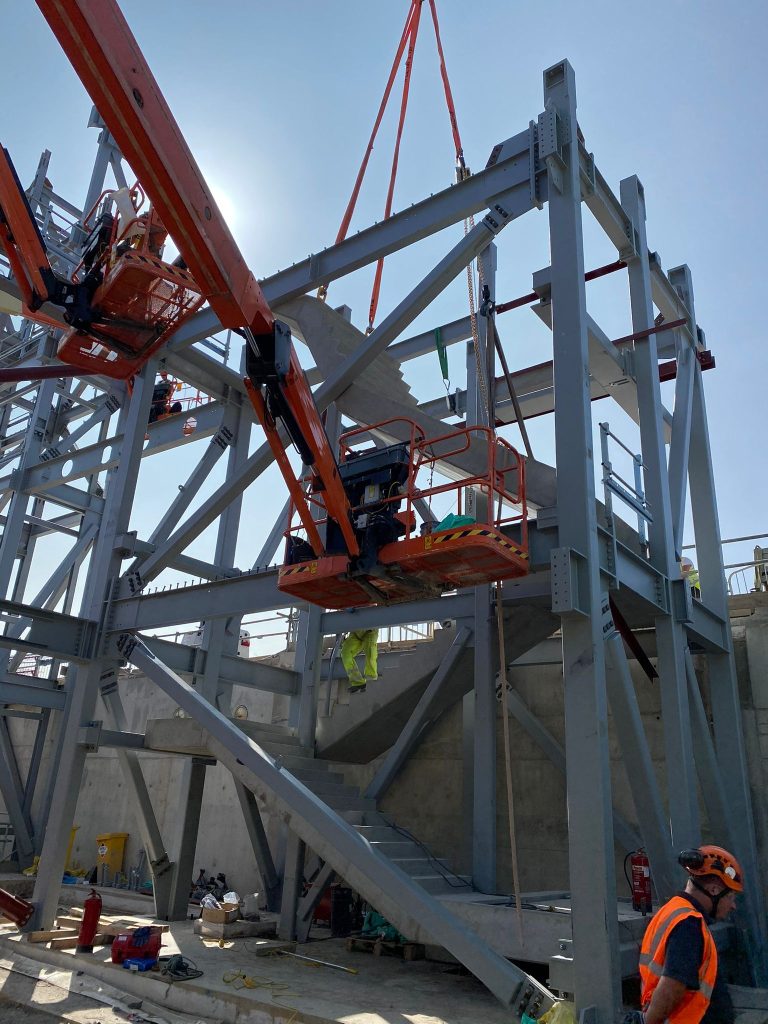
Site preparation is a foundational step. Anchor bolts embedded in concrete foundations must be accurately positioned within tight tolerances, as even minor misalignments can complicate column placement. Surveying teams verify gridlines and elevation benchmarks before steel erection begins. Cranes are positioned based on lift studies that account for load weight, radius, wind conditions, and ground bearing capacity. A detailed erection plan outlines the sequence in which columns, beams, bracing, and decking will be installed to maintain structural stability at every stage.
The initial phase of steel erection usually involves setting primary columns. These vertical members are aligned and temporarily secured using erection bolts. Once plumbed and verified, beams and girders are connected to form stable frames. Temporary bracing is often required until the structural system achieves sufficient rigidity. Precision is critical; cumulative tolerance errors can result in connection misfits or compromised load paths.
Bolted connections are common in structural steel installation due to speed and reliability. High-strength bolts are installed following specific torque or tensioning procedures to ensure proper clamping force. In certain cases, field welding is required, particularly for moment connections or specialized structural details. Welding operations must comply with established standards and undergo inspection through visual examination, ultrasonic testing, or radiographic testing to confirm integrity.
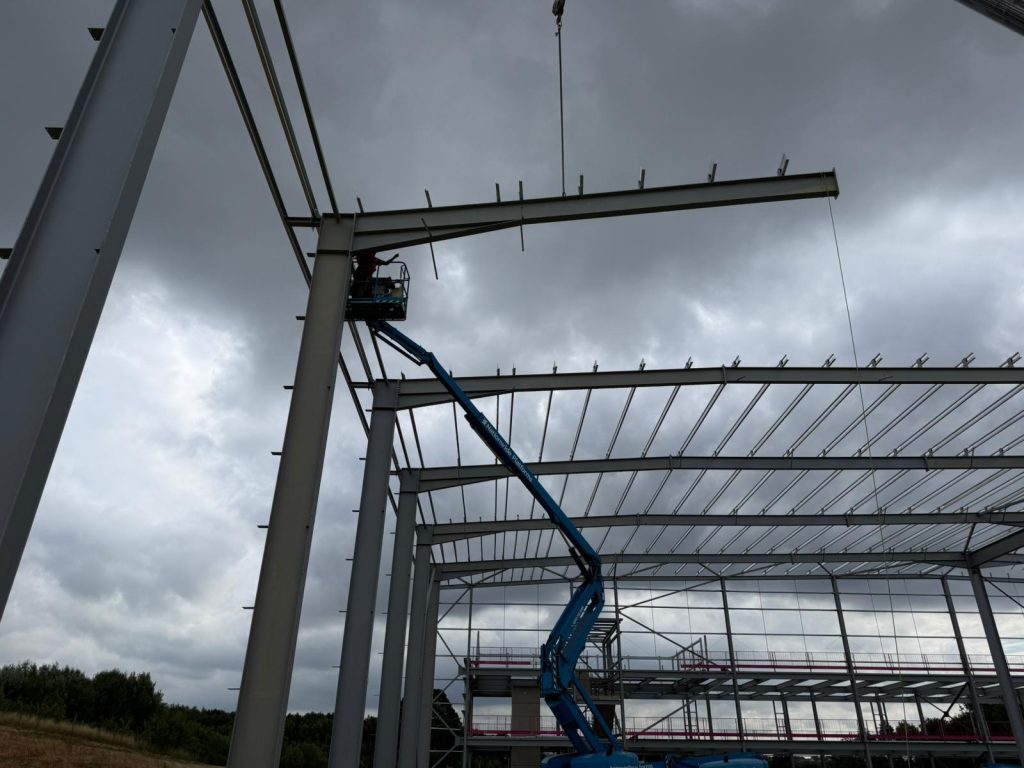
Safety is a central concern throughout steel installation. Working at height, handling heavy loads, and coordinating crane operations introduce significant risk. Fall protection systems, controlled access zones, and strict communication protocols are essential. Weather conditions, especially wind, can affect crane stability and the safe positioning of long-span members. Competent supervision and adherence to regulatory frameworks help mitigate these risks.
Quality control and inspection occur continuously during installation. Engineers and inspectors verify bolt installation, weld quality, member alignment, and coating integrity. Any non-conformance must be documented and corrected before proceeding. In projects requiring fire resistance, additional steps such as fireproofing application follow structural completion.
Steel installation offers several advantages compared to alternative structural systems. The material’s high strength-to-weight ratio enables long spans and reduced foundation loads. Off-site fabrication enhances precision and reduces on-site labor time. Additionally, steel structures can often be erected more quickly than reinforced concrete systems, accelerating overall project timelines.
However, successful steel installation depends on coordination. Structural engineers, fabricators, logistics providers, crane operators, and site crews must operate in sync. Delays in fabrication, transport disruptions, or design changes can propagate quickly across the project lifecycle. Effective communication and digital project management tools are therefore indispensable.
In contemporary construction, steel installation is increasingly influenced by advanced technologies. 3D scanning verifies as-built conditions, drones assist in inspection, and digital twins provide real-time project visibility. These tools enhance accuracy and reduce rework, improving both safety and efficiency.
Ultimately, steel installation is not merely the act of assembling metal components. It is a technically demanding discipline requiring structural understanding, operational planning, and disciplined execution. When performed correctly, it transforms engineered drawings into resilient frameworks capable of supporting the infrastructure and buildings that define modern society.