Glulam, short for glued laminated timber, is an engineered wood product manufactured by bonding layers of dimensional lumber with durable, moisture-resistant adhesives to form structural members of superior strength and dimensional stability. By laminating multiple timber layers with their grain aligned longitudinally, glulam achieves enhanced load-bearing capacity compared to solid sawn timber of equivalent cross-section. It has become a central material in modern mass timber construction, bridging traditional woodworking with advanced structural engineering.
The manufacturing process is fundamental to glulam’s performance characteristics. Individual lumber boards are kiln-dried to controlled moisture levels, visually or mechanically graded for structural integrity, and arranged strategically within the laminate stack. Higher-strength laminations are typically placed in zones of maximum stress, such as the outer layers of beams, while lower-grade material may be used in the core. Structural adhesives are applied between layers, and the assembly is pressed under controlled conditions to achieve a monolithic bond. The result is a structural member capable of spanning long distances with consistent mechanical properties.
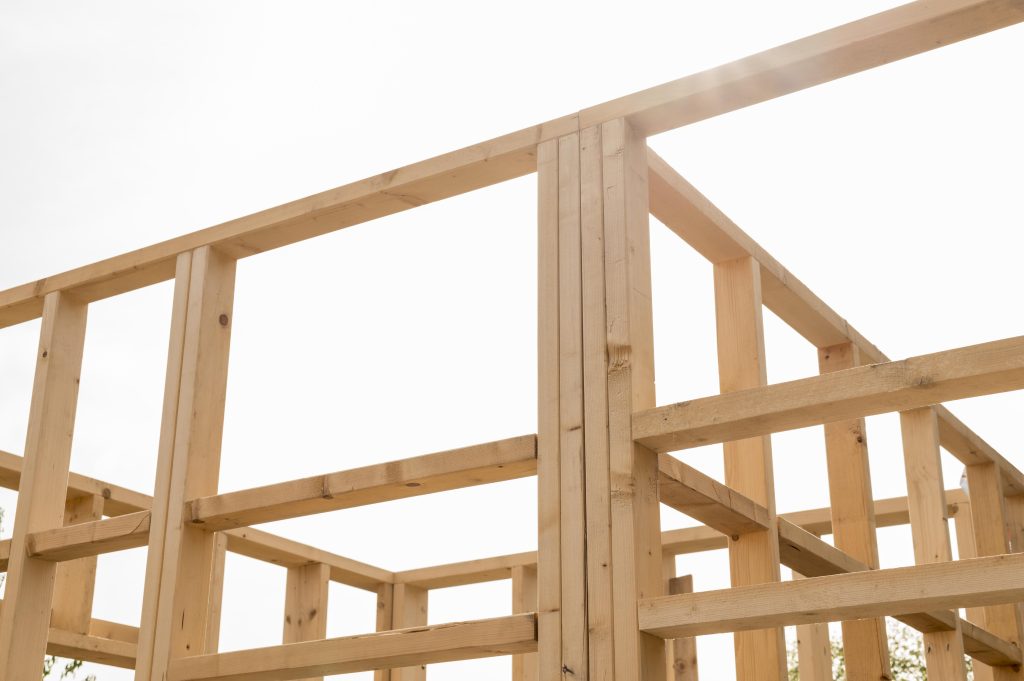
From a structural engineering perspective, glulam offers a favorable strength-to-weight ratio. Its relatively low density reduces foundation loads while maintaining significant bending and compressive strength. It can be manufactured in straight or curved configurations, enabling architectural forms that are difficult or costly to achieve with steel or reinforced concrete. Arched beams, tapered profiles, and custom geometries are routinely produced for applications such as sports halls, auditoriums, bridges, and commercial buildings.
Fire performance is often misunderstood in timber structures, but glulam exhibits predictable behavior under fire exposure. When subjected to high temperatures, the outer layer chars at a relatively consistent rate, forming an insulating layer that protects the inner core and preserves structural capacity for a defined period. This charring behavior can be incorporated into structural calculations, allowing engineers to design members that meet specified fire resistance ratings without additional protection in certain applications.
Moisture management is critical in glulam design and installation. Although engineered adhesives provide durability, prolonged exposure to high humidity or direct water ingress can compromise performance. Proper detailing, ventilation, and protective finishes are therefore essential. In exterior applications, preservative treatments and weather-resistant coatings are commonly specified to extend service life.
Sustainability is a key driver behind the growing adoption of glulam. Timber is a renewable resource when sourced from responsibly managed forests. During growth, trees sequester carbon dioxide, and this stored carbon remains embedded within the structural member throughout its lifecycle. Compared to energy-intensive materials such as steel and concrete, glulam typically exhibits lower embodied carbon, contributing to reduced overall environmental impact in building projects.
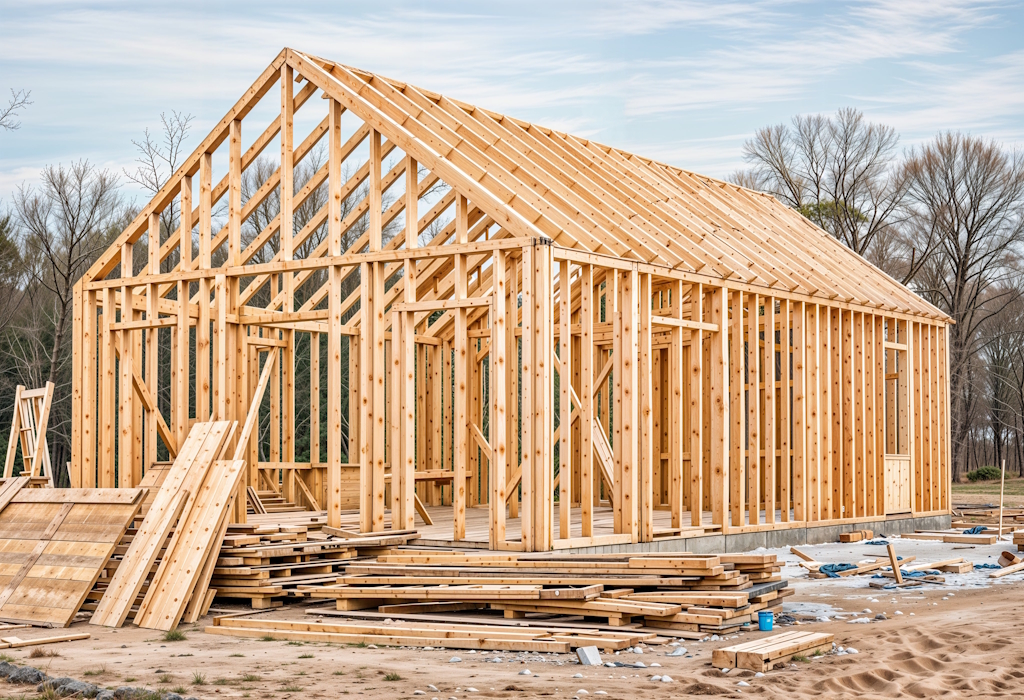
Construction efficiency is another advantage. Glulam components are prefabricated with high precision, allowing rapid on-site assembly. This reduces construction time, labor costs, and material waste. The lighter weight of timber members also simplifies transportation and lifting logistics relative to heavy steel sections or precast concrete elements.
Acoustically and aesthetically, glulam provides distinct benefits. Exposed timber surfaces create warm, natural interior environments and can contribute positively to occupant well-being. The material’s visual quality often eliminates the need for additional finishing layers, integrating structural and architectural functions into a single element.
Despite its strengths, glulam requires careful engineering consideration. Long-term deflection under sustained loads, connection detailing, and compatibility with other structural systems must be rigorously analyzed. Connections, often using steel plates and dowels or bolts, are critical nodes that govern overall structural performance.
Glulam represents a convergence of tradition and innovation. By transforming small timber sections into large-scale engineered components, it enables ambitious architectural expression while meeting stringent structural and environmental requirements. As the construction industry increasingly prioritizes sustainability and efficiency, glulam continues to establish itself as a technically robust and environmentally responsible solution for contemporary structural design.